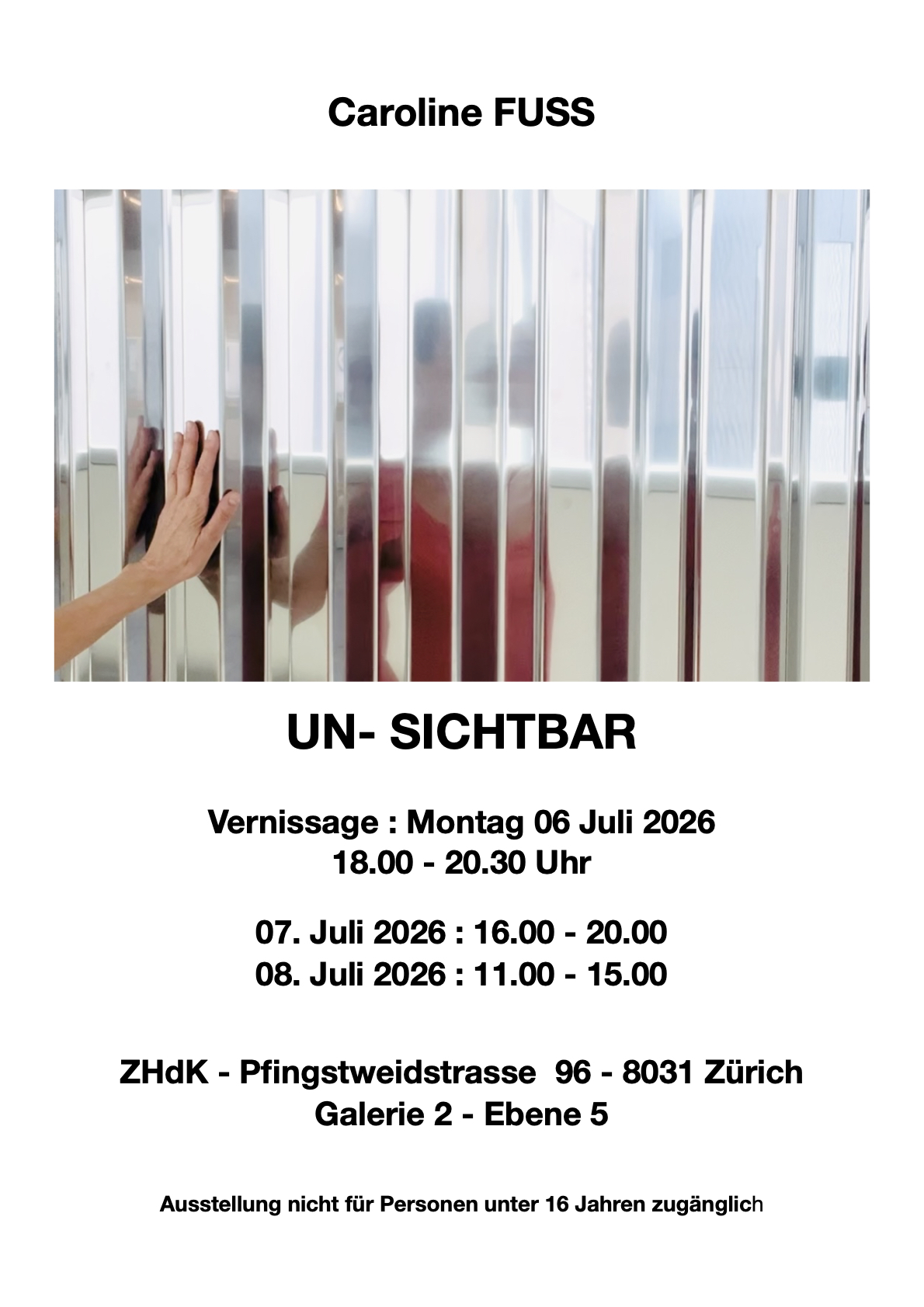
Caroline Fuss’s artistic practice has been shaped by an autobiographical approach. At once the subject and observer of her own narrative, she positions herself simultaneously as director and protagonist. Her work adopts an almost documentary perspective: the fragments of life she presents are neither justified nor explained, but made visible and exposed as open material for analysis, interpretation, and questioning by the viewer. For Caroline Fuss, autobiographical practice extends beyond the simple act of recounting the self. It opens up a space for formal, conceptual, and critical inquiry, in which autobiography becomes a tool for artistic experimentation and reflection. Each work constitutes an autonomous structure, referring to a specific and distinct moment in her personal history. Rather than following a strictly chronological narrative, the body of work unfolds through a logic of fragmentation, with each piece functioning as an independent narrative. The work therefore does not recount a lived experience in a continuous form; instead, it brings together fragments, tensions, and emotional states.